What Is an Emergency Fund? (and How to Start One Fast)
An emergency expense doesn't wait for a convenient moment to show up. Without money already set aside for it, the options that are left often cost more, whether that's a credit card balance, an overdraft fee, or a loan with terms that make things worse before they get better. An emergency fund can help change that.
What Is an Emergency Fund?
Emergency Fund Definition
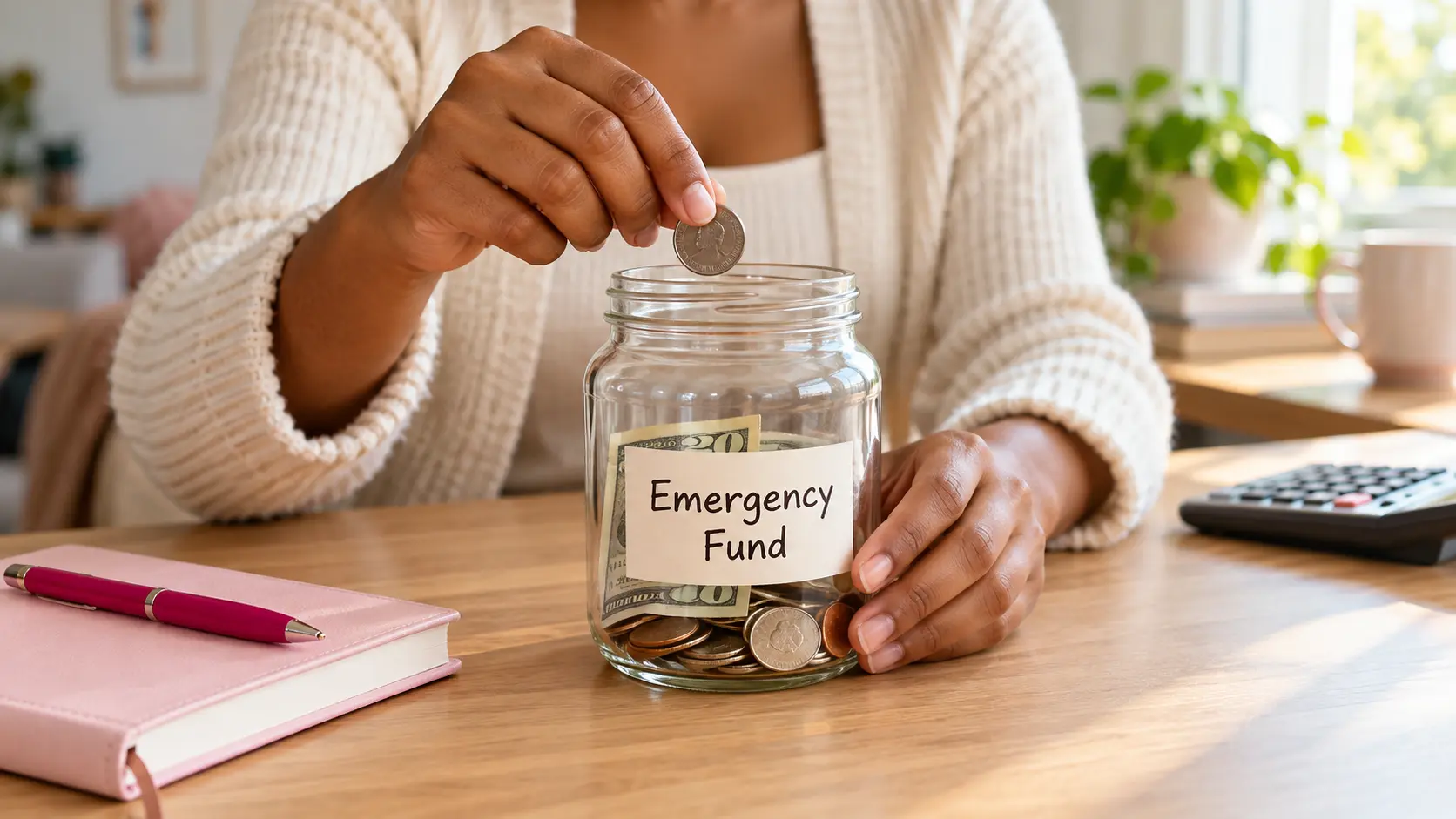
An emergency fund is money set aside specifically for unexpected expenses or financial emergencies. It's kept separate from everyday spending money so it's available when something urgent comes up, rather than getting absorbed into regular bills or purchases. The purpose is financial stability, a cushion that gives you options when something unexpected happens instead of scrambling to figure out a solution on the spot.
What Counts as an Emergency?
Medical expenses, car repairs, emergency travel, job loss, and essential home repairs are a few examples of common emergency expenses. These are costs that show up without warning and need to get handled quickly.
Holiday shopping, planned vacations, routine bills, and non-essential purchases don't quite belong in this category, even when they feel urgent in the moment. An emergency fund is generally best reserved for serious surprises rather than predictable expenses that simply weren't budgeted for.
Why Is an Emergency Fund Important?
Reduces Financial Stress
An unexpected bill feels different depending on whether money is already set aside for it. Without a cushion, a $200 repair can trigger real anxiety. With even a small fund in place, that same repair becomes an inconvenience instead of a crisis.
Helps Avoid Debt
When an emergency fund isn't there to cover a surprise cost, credit cards, payday loans, and overdraft fees often become the fallback. Having savings set aside ahead of time can reduce reliance on these costlier options after the fact.
Creates More Financial Flexibility
A savings cushion, even a modest one, creates options when life doesn't go according to plan. Instead of being forced into whatever solution is fastest, having some savings available means you can actually weigh what makes sense for your situation.
How Much Should You Have in an Emergency Fund?
Start Small
It's easy to assume an emergency fund only counts once it's in the thousands. In reality, meaningful progress can start much smaller. A first goal of $100 is often realistic, with $500 and then $1,000 as milestones to build toward from there.
The 3-6 Month Rule
Traditional financial guidance often points toward saving three to six months of essential expenses. It's a solid long-term goal, but getting there may feel challenging when you're just starting out or working with a tight budget. It's worth keeping in mind for later, without treating it as the starting line.
Emergency Fund Milestones
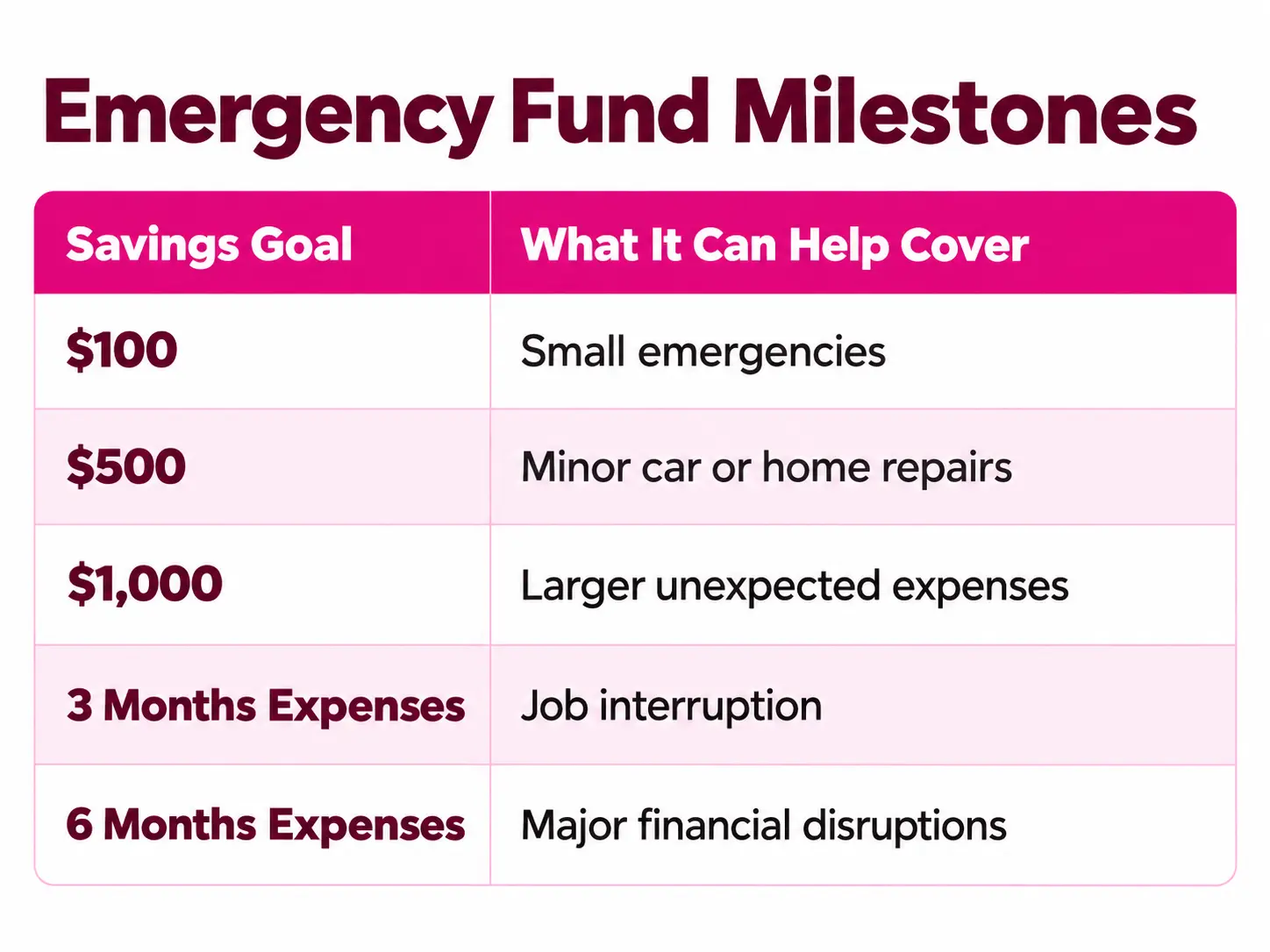
Each milestone builds on the last. Reaching $100 doesn't necessarily mean the work is done, but it does mean the next unexpected expense has somewhere to draw from instead of derailing everything else.
How to Start an Emergency Fund Fast
Open a Dedicated Savings Account
Keeping emergency savings in a separate account from everyday spending money can make a big difference. When the money sits in the same account used for groceries and gas, it becomes easier to dip into without meaning to.
Automate Small Transfers
Set up an automatic transfer, even something as small as $5 a week or $10 per paycheck, and you build savings without requiring a decision every time. Round-up savings tools, which set aside spare change from purchases, can also add up gradually in the background.
Save Windfalls Instead of Spending Them
Tax refunds, work bonuses, and cash gifts offer a natural opportunity to boost an emergency fund quickly. Since this money often arrives outside a regular budget, redirecting some or all of it toward savings can feel less like a sacrifice than adjusting a paycheck would.
Cut One Expense and Redirect It
Picking a single expense, like one streaming service, weekly takeout, or a recurring convenience purchase, and redirecting that money toward savings is often a manageable place to start rather than trying to overhaul an entire budget at once.
Start With a Goal You Can Actually Reach
Aiming for a first $100, then $500, keeps the goal within reach and builds momentum. A $10,000 emergency fund might be the eventual destination, but treating it as the starting requirement can discourage progress before it even begins.
How to Build an Emergency Fund When You're Living Paycheck to Paycheck
Start Smaller Than You Think
Five dollars is enough to start. The amount matters less than the habit of setting something aside consistently, especially in the beginning.
Save Consistently, Not Perfectly
A smaller amount saved regularly can add up faster and more reliably than an ambitious amount that only gets saved occasionally. Consistency builds the habit that makes saving sustainable.
Focus on Progress, Not Perfection
Pausing savings and restarting more than once is part of the process rather than a sign that something isn't working. Picking back up after a pause still counts as progress.
Build Savings Into Your Routine
Emergency savings work best when you save while you budget and track spending, not as a separate project disconnected from the rest of your financial life.
Where Should You Keep Your Emergency Fund?
High-Yield Savings Accounts
These accounts can offer a better return than a standard savings account while still keeping the money accessible when needed.
Traditional Savings Accounts
A traditional savings account works fine too, particularly if a high-yield option isn't available through your bank. The priority is keeping the money separate and reasonably easy to access, not necessarily maximizing return.
What to Avoid
Emergency savings generally shouldn't go into risky investments or other volatile assets, since the goal is having money available when needed rather than watching it grow or shrink with the market. Anything that's hard to access quickly also works against the purpose of an emergency fund.
Common Emergency Fund Mistakes
Waiting Until You Can Save a Lot
Holding off until a large deposit feels possible can mean never starting at all. Small, early contributions matter more than waiting for the ideal moment.
Using Emergency Savings for Non-Emergencies
Dipping into the fund for something that isn't genuinely urgent, like a sale or a planned purchase, can undo months of progress and leave the fund unavailable when a real emergency happens.
Keeping Savings in Checking
Money sitting in a checking account can get spent, even unintentionally, since it's mixed in with everyday funds. A separate account creates a helpful barrier.
Giving Up After a Setback
Life Happens. Using your savings or missing a few months doesn't mean you have to start over from zero. Picking back up where things left off keeps momentum going.
What If You Don't Have an Emergency Fund Yet?
Building savings takes time, and there's no way around that. While an emergency fund is the long-term goal, unexpected expenses can still show up before there's been a chance to build one.
This is where short-term tools can help bridge a gap. A cash advance app like FloatMe is designed to help cover a small, immediate expense without a credit check, offering a way to handle a surprise cost while working toward a fuller savings cushion.
Emergency Fund FAQs
How much money should I keep in an emergency fund?
A common starting goal is $100, building from there toward $500 or $1,000. Traditional guidance suggests three to six months of expenses as a longer-term target, though reaching that can take considerable time.
What qualifies as an emergency expense?
Medical bills, car repairs, job loss, and essential home repairs generally count. Planned expenses like vacations or holiday shopping typically don't, even when they feel financially pressing.
How fast can I build an emergency fund?
This depends on individual income and expenses, but small, consistent contributions can add up to a meaningful cushion faster than expected.
Can I start an emergency fund with no money?
Starting with a small amount, even just a few dollars a week, is possible and can work better than waiting for a larger sum to become available.
Should I pay off debt or build an emergency fund first?
This depends on individual circumstances, including interest rates and how much financial flexibility you have right now. Building a small emergency fund first can help prevent new debt from unexpected expenses while paying down existing balances.
Where should I keep my emergency savings?
A dedicated savings account, ideally separate from everyday spending, works well. High-yield savings accounts can offer a better return while keeping the money accessible when needed.
Ready to manage financial gaps while you build your savings? Try FloatMe and see if it fits your situation.