What Is Credit Monitoring and How Does It Work?
Credit monitoring is a service that watches your credit report and tells you when something on it changes, from a new account to an unfamiliar inquiry. It's way to stay aware of what's on your file without having to wait until you happen to check it yourself.
Knowing what credit monitoring does, along with what it can't do, can help you decide whether a paid service fits your situation or whether the free tools already available cover what you feel you need.
What Is Credit Monitoring?
A credit monitoring service watches one or more of your credit reports and notifies you when specified information changes. Depending on the provider, a notification might be triggered by a new account appearing, a balance shifting, an inquiry getting recorded, or your personal information being updated.
Credit monitoring functions as an early-warning and awareness tool. It can tell you something changed, but it does not prevent identity theft, and it does not guarantee that every form of fraud will be caught. A useful comparison is a smoke detector rather than a lock. The alert tells you to go look at something, but responding is still up to you.
A credit report and a credit score aren't the same thing, and it's easy to confuse them. A credit report contains your credit activity and account information, the record of what you've borrowed, how you've paid, and who has checked your file. A credit score is a number calculated from that report data using a scoring model. Monitoring services watch the report, and some also give you access to a score, but the two features stay separate.
Why Monitoring a Credit Report Matters
Catching an unfamiliar inquiry, account, or reported delinquency earlier gives you more time to investigate and limit further harm. When fraud goes unnoticed for months, unwinding it becomes far harder than when someone catches it within days.
Monitoring also shows you ordinary reporting errors, which show up more often than you might expect. Finding a mistake before you apply for a mortgage, a car loan, or another credit product gives you time to dispute it rather than discovering it at the worst possible moment.
A change showing up in an alert is not automatically fraud, though. Legitimate lender updates, routine balance changes, or an account you recently opened yourself can all trigger a notification. Part of using monitoring well is learning to tell an expected change from one that deserves a closer look.
How Does Credit Monitoring Work?
After you enroll and verify your identity, the service begins monitoring data supplied by whichever credit bureau or bureaus your plan includes. From then on, it watches the covered file for the kinds of changes it's built to flag.
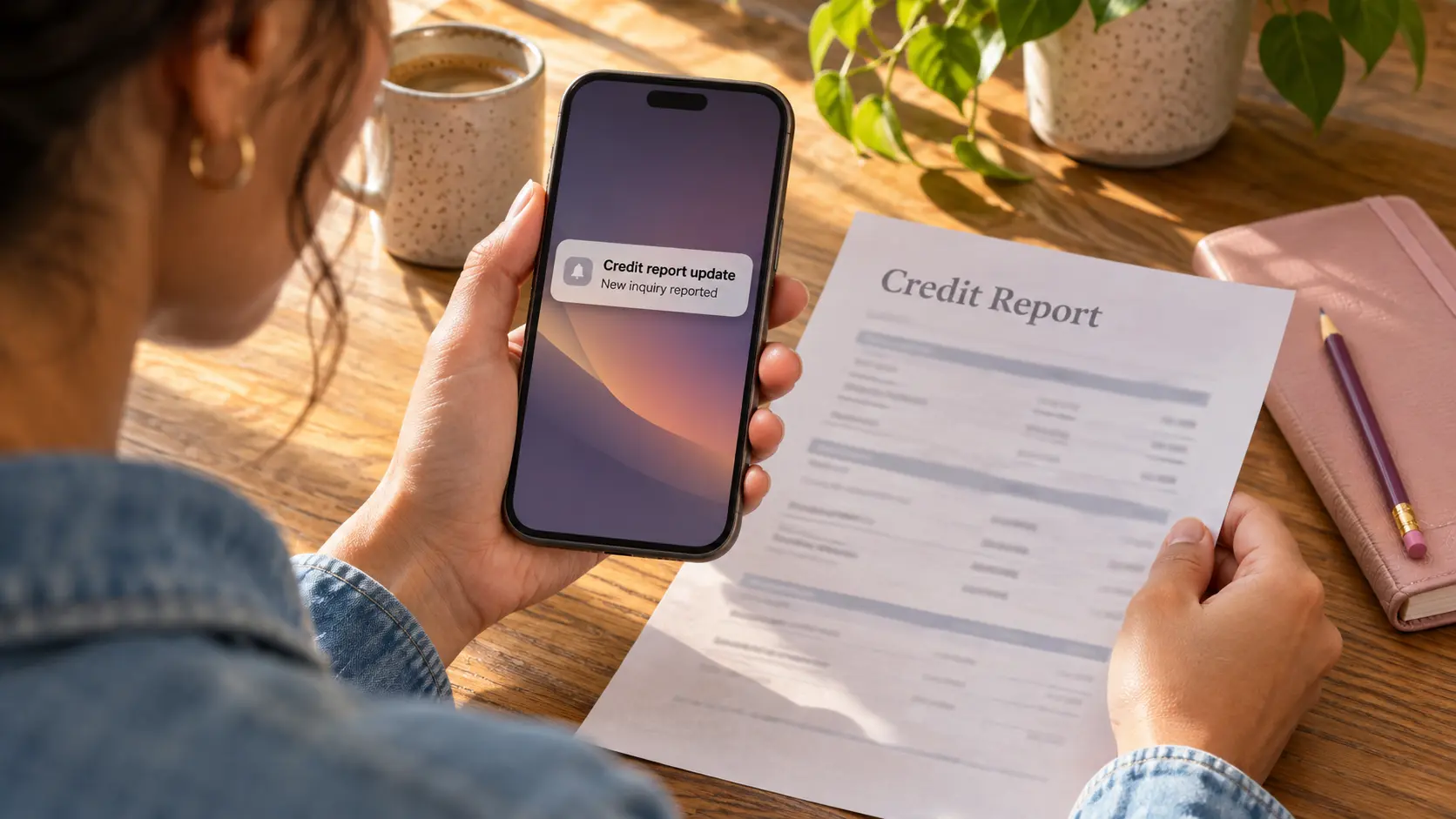
When monitored information changes, the service sends an alert through whatever channel it supports, which might be an app notification, an email, a text message, or a phone call. You review what came in, decide whether the change is expected, and take action if something looks off.
Timing is where expectations often need adjusting. Alerts are not instantaneous, because creditors report to bureaus on their own schedules, and monitoring can only detect a change after the information reaches a bureau. A charge you made today might not appear for days or weeks, depending on when the creditor reports it.
One-Bureau vs. Three-Bureau Credit Monitoring
Single-bureau services watch one credit file. Three-bureau services watch your files at all three nationwide bureaus, Equifax, Experian, and TransUnion.
This matters because your three reports may not contain identical information. Lenders don't always report to every bureau, and when they do, they don't necessarily update all three at the same time. An account or change that appears on one report might be missing from another, so broader coverage reduces the chance of missing something.
Coverage is only one factor when comparing services. Alert frequency, whether score access is included, price, trial terms, and cancellation requirements all deserve attention before you commit to a plan.
What Do Credit Monitoring Alerts Show?
The specific events a service flags depend on the provider, but most monitoring falls into a few recognizable categories.
New Accounts and Credit Inquiries
A new credit card, loan, or hard inquiry might be exactly what you expect after applying for credit. The same alert becomes a red flag when you didn't initiate anything.
An alert points you to a change to review rather than necessarily telling you the whole story. The underlying credit report and the named creditor provide context to help you confirm whether the activity is yours.
Account, Balance, and Payment-Status Changes
Depending on the service, alerts may cover changes to your credit limit, balance updates, late payments being reported, accounts going to collections, or accounts being closed.
A higher balance or a newly reported late payment can affect your credit standing. An alert flags that the change happened, but it doesn't explain or calculate exactly how your score moved, since scores draw on many factors at once.
Personal-Information and Public-Record Changes
Some services flag changes to your name, address, or phone number, along with reportable public-record events such as a bankruptcy filing.
An unfamiliar change of this kind can be an early warning sign, especially if you didn't move or change your number. Verification through your credit report and the relevant organization is still necessary before assuming the worst, since data-entry updates and legitimate changes happen too.
What Credit Monitoring Cannot Do
Being clear about the limits is as important as understanding the benefits. Credit monitoring does not block a fraudulent application, remove errors from your report automatically, or guarantee protection from identity theft. It reports that something happened, acting on it is a separate step, and that part's on you.
It also generally cannot detect activity that never appears on a monitored credit report. Bank-account withdrawals, tax-refund fraud, and some forms of utility or medical identity theft can happen without ever showing up on a credit file, which puts them outside what standard credit monitoring can see.
Scope varies quite a bit from one provider to the next. Bureau coverage, how often files are refreshed, whether identity monitoring is included, what recovery support is offered, and whether you get score access can all differ substantially between services that both call themselves credit monitoring.
Credit Monitoring vs. Identity Monitoring
Credit monitoring focuses on changes within your credit files. Identity monitoring casts a wider net, searching additional databases and sources for misuse of your personal information, sometimes including places like data-breach records or the dark web.
Neither category catches every type of misuse. Because of that, bank account alerts, secure and unique passwords, multifactor authentication, and directly reviewing your statements all stay important regardless of which monitoring service you use.
Credit Monitoring vs. a Credit Freeze or Fraud Alert
Monitoring notifies you after a covered change gets detected. A security freeze works differently, restricting access to your credit file so opening new credit in your name becomes harder in the first place. A fraud alert is somewhere in between. It tells prospective creditors to take extra steps to verify your identity before extending credit, though it doesn't block access the way a freeze does.
Both freezes and fraud alerts are typically free. A freeze generally has to be placed separately with each nationwide bureau, while placing a fraud alert with one bureau triggers notice to the other two. Some people use these tools alongside monitoring rather than treating them as either-or choices.
What to Do When You Receive a Credit Alert
If You Recognize the Activity
Confirm that the creditor, account type, date, and amount line up with a recent application or a normal account update. If everything matches something you did, further action is usually not needed.
Keep the alert for your own records, and check later updates to confirm the account keeps reporting accurately.
If You Do Not Recognize the Activity
Open your monitoring service through its official app or website rather than clicking a link in an unexpected message, since fraudulent messages sometimes imitate real alerts. Review the source credit report and the alert details directly.
From there, contact the listed creditor using a phone number you know to be legitimate, dispute any inaccurate credit-report information with both the reporting company and the data furnisher, and document your communications as you go.
For suspected identity theft, IdentityTheft.gov provides a government-run recovery plan, and you can consider placing a free credit freeze or fraud alert while you sort things out.
Fast-Response Checklist
Verify the alert through a trusted channel and compare all the credit reports available to you. Contact the creditor or collector connected to the unfamiliar item. Freeze your credit when appropriate and report identity theft through the FTC's official recovery site. Change any compromised credentials, and keep watching your financial accounts for activity that wouldn't show up on a credit file at all.
How to Choose a Credit Monitoring Service
A few factors separate a service that fits your needs from one that doesn't.
Bureau coverage tells you which of Equifax, Experian, and TransUnion actually get monitored. Alert details and timing cover which events trigger a notification, how often your files are checked, and which notification channels are offered.
Total cost and terms include the recurring price, when any trial expires, how cancellation works, and whether "free" access depends on buying another product. Included tools might mean credit-report or score access, identity monitoring, recovery assistance, or insurance, though none of these should be treated as guarantees. Security and privacy come down to how your identity data gets collected, protected, shared, and eventually deleted.
Weighing those factors against the price gives you a clearer picture than any single feature on its own.
Can You Monitor Your Credit for Free?
Paying for a service isn't the only option. You can review free credit reports from each nationwide bureau through AnnualCreditReport.com, and the CFPB currently notes that free online reports may be available weekly.
Reviewing your reports by hand can reveal unfamiliar accounts, inquiries, or incorrect personal details on its own. What automated monitoring adds is the ongoing alerts and the convenience of not having to remember to check. For some people the manual approach is enough, while others prefer paying for automatic notifications.
AnnualCreditReport.com is the federally authorized site for free credit reports. A free credit report also doesn't necessarily include a free credit score, since the two are separate and not every free-report source provides both.
Bring Credit Monitoring Into Your Everyday Money Routine With FloatMe
Checking your credit once in a while is considered a good habit. Building awareness of your financial changes in your regular routine, so you notice what's happening across your money rather than only at credit-check time, takes that habit further.
FloatMe is built to help members stay aware of their money day to day, and credit monitoring is part of the toolkit. FloatMe does not report Floats to the major credit bureaus, so Float activity does not affect your credit. Credit monitoring is an awareness feature. It does not build credit and it does not prevent fraud. Explore FloatMe and see how credit monitoring fits into your everyday money routine.
Frequently Asked Questions About Credit Monitoring
Does credit monitoring hurt your credit score?
Checking or monitoring your own credit is generally treated as a soft inquiry, which does not lower your credit score. Soft inquiries differ from the hard inquiries that happen when you apply for credit.
Is credit monitoring the same as checking a credit score?
No. Monitoring watches for covered changes to your credit file, while score access is a separate feature that may or may not be included in a given service.
Can credit monitoring prevent identity theft?
No. It can notify you after covered changes appear on your report, which may help you respond sooner, but it cannot stop fraud from occurring in the first place.
How quickly do credit monitoring alerts arrive?
Timing depends on when creditors report, when bureaus update, and how often your provider checks your files. Alerts are not truly instant, since monitoring can only detect a change after it reaches a bureau.
Is paid credit monitoring the right choice?
The answer depends on how much you value the bureau coverage, convenience, and any bundled services against the price. Free credit reports and free security freezes remain available as alternatives or as complements to a paid service.